Get free quotes from process serving near you
Takes about a minute. Free, no obligation; providers reply to you directly.
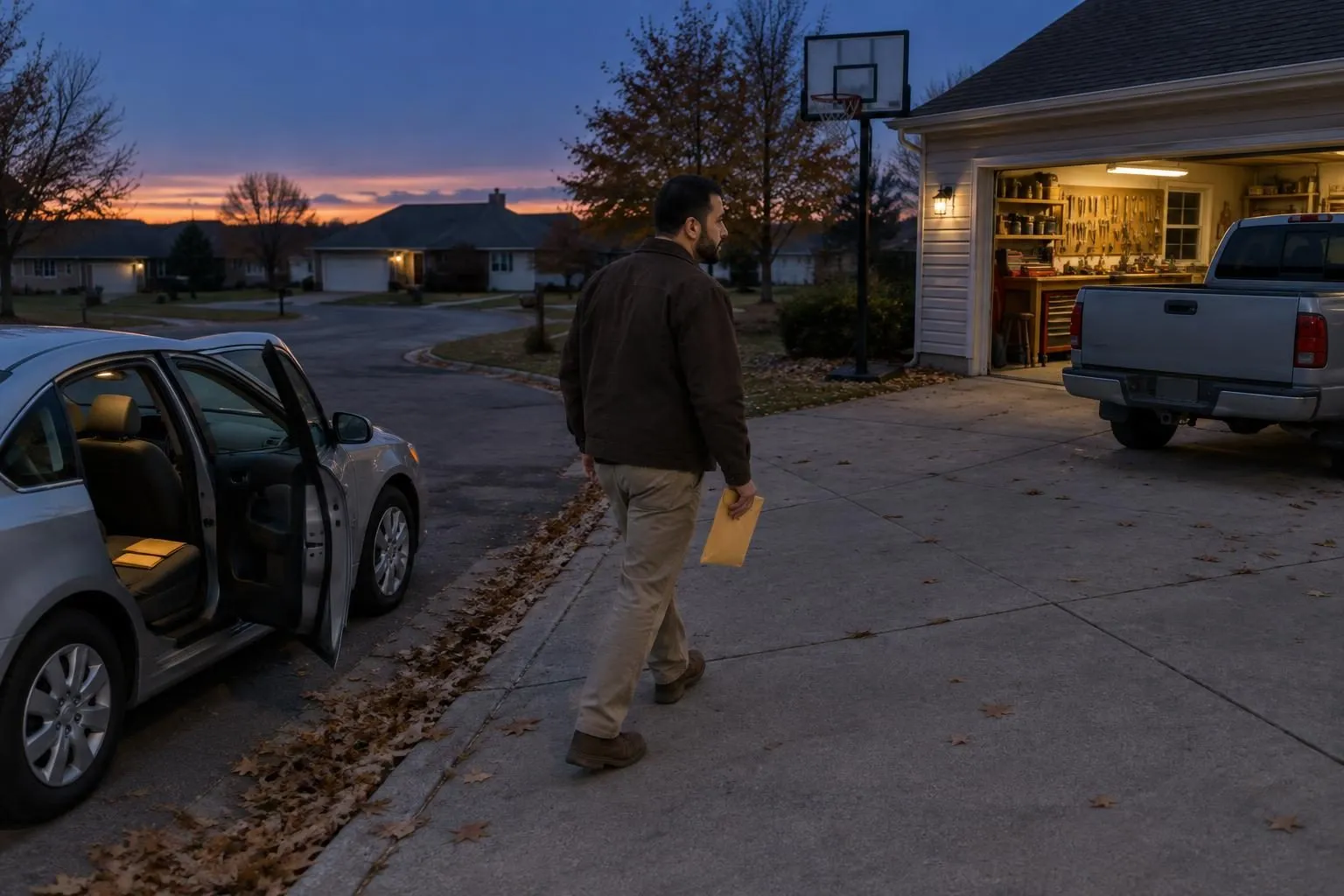
The first time I watched a process server work, I thought it was going to be dramatic. It wasn’t. He drove to a house in Glendale, rang the doorbell, said “Are you David Chen?” when the door opened, handed over a manila envelope, and walked back to his car. The whole thing took 45 seconds.
What happened before that 45 seconds? Two prior attempts at a different address, a skip trace that turned up a LinkedIn profile with a listed employer, one workplace visit that went sideways because of a receptionist who wouldn’t confirm names, and about three hours of documentation work spread across four days.
That’s the job nobody explains.
The Short Version:A process server’s job is to legally deliver court documents to a specific person and prove it happened in a way that holds up in court. The delivery itself takes seconds. Everything around it — locating the person, timing the attempt, documenting the result — is where the real work is.
Key Takeaways:
- 40% of serves require 3 or more attempts because recipients actively avoid service
- Invalid proof of service dismisses 10–15% of cases — the paperwork matters as much as the delivery
- Process servers handle everything from summonses and subpoenas to eviction notices and restraining orders
- Rush service (same-day or next-day) typically runs $75–$150 for the first attempt
The Actual Job, Start to Finish
Most people picture process service as a simple errand. An attorney hands someone papers; that someone drives to a house and drops them off. Done.
Here’s what most people miss: the legal requirements around that handoff are what make the profession exist at all. Anyone can hand someone a document. Only a licensed process server can do it in a way that stands up when a defendant claims they were never notified.
Step 1: Intake and jurisdiction verification
An attorney, paralegal, or collections firm sends the process server a packet — usually the documents to be served plus a service instruction sheet. The first thing a competent server does isn’t go find the person. It’s verify the rules. California won’t allow service between 9pm and 6am. Texas has different substituted-service standards than New York. If you serve someone wrong, the case doesn’t just get delayed — it can get dismissed.
Over 15,000 licensed process servers operate in the U.S., and the good ones have these state rules memorized cold.
Step 2: Locate the recipient
The address you’re given is often wrong. Not maliciously wrong — just stale. People move. Courts are slow. A complaint filed six months ago might have an address from a year before that.
This is where skip tracing comes in. Process servers run searches across property records, voter rolls, social media, utility databases, and sometimes good old-fashioned phone calls to family members. One firm’s servers located a debtor via Instagram after five failed address attempts — the account was set to public and showed a tagged location from a recent gym visit.
Step 3: Attempt service
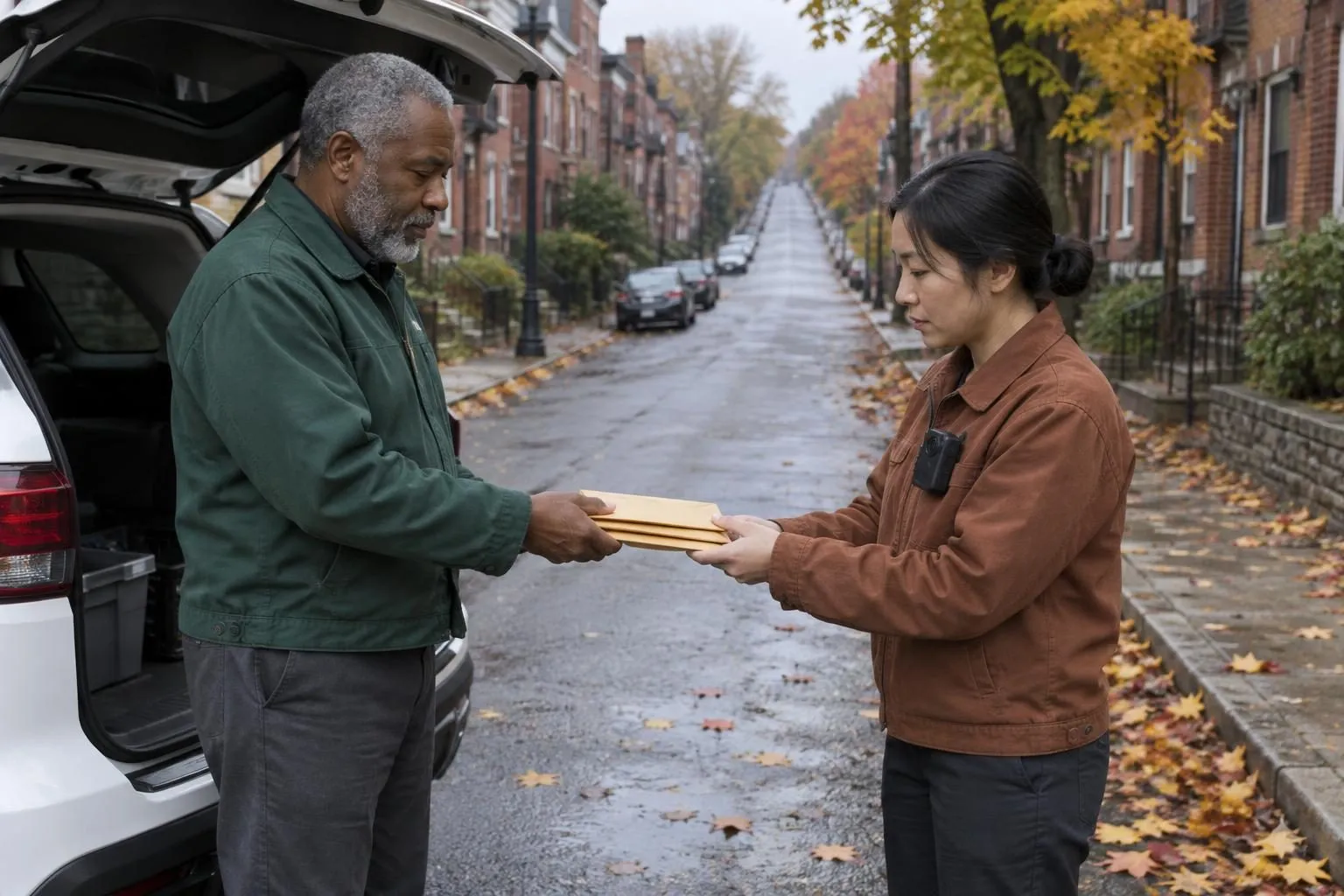
Personal service — physically handing documents to the named individual — is the gold standard. To do it right, the server has to confirm identity (name, physical description, sometimes photo confirmation) before handing over anything.
When personal service fails, servers can often use substituted service: leaving documents with a co-resident of suitable age and mailing a copy, or in some cases posting at the door (for evictions). Each state defines what qualifies. Getting this wrong is how you end up with a dismissed case.
Standard practice is 3–5 attempts, staggered across different times of day. Most services charge $50–$100 per subsequent attempt after the first.
Reality Check:40% of civil serves require three or more attempts. If someone is actively avoiding service — dodging the door, using a gated community, having their assistant screen visitors — the server doesn’t give up. They get creative. That’s what you’re paying for.
Step 4: Document everything
This is where cases actually get won or lost.
A process server’s proof of service (also called an affidavit of service or return of service) has to detail who was served, what was served, when, where, and exactly how. Courts want specifics: “I served a white male approximately 5’10”, 180 lbs, who stated his name was [name], at 4:23pm on April 15th at [address].”
Invalid affidavits are responsible for 10–15% of case dismissals. That’s not a small number. About 80% of professional servers now use body cameras — not to be dramatic, but because video evidence of a completed serve is almost impossible to challenge.
Pro Tip:When you hire a process server, ask whether they use body cams and digital proof-of-service templates. Both dramatically reduce the chance your case hits a paperwork snag.
The Hard Assignments
Standard residential service is straightforward. The complicated jobs are what separate experienced servers from order-takers.
| Scenario | What It Requires | Typical Cost |
|---|---|---|
| Evasive recipient | Skip tracing + multiple timed attempts | $75–$150 + $50–$100/attempt |
| Stakeout service | Up to 4-hour surveillance | $200–$500+ |
| Gated community or secured building | Coordination with property management or substituted service | Standard + coordination fee |
| Interstate service | Partner server in recipient’s state, jurisdiction verification | $150–$300 |
| Rush/same-day | 24/7 availability, GPS-tracked routing | $75–$150 (first attempt) |
The NAPPS-affiliated firms handling high-volume work move 10 million+ services per year collectively. During the 2024 Florida housing crisis, some servers were handling 200+ eviction notices per week. That’s not a casual operation — it’s logistics at scale.
What You’re Actually Paying For
I’ll be honest: the first time I saw a $125 invoice for a 45-second interaction, I thought it was absurd. Then I understood the calculus.
You’re paying for:
- Their license (California requires a certification exam plus six or more years of experience)
- Their liability (a bad serve that tanks your case is on them)
- Their documentation (court-admissible proof, not just a text saying “I did it”)
- Their time before the serve (skip tracing, failed attempts, scheduling around availability)
- The legal standing their presence creates (a friend handing over papers creates none)
The NAPPS recommendation isn’t subtle about this: hire licensed pros over friends to avoid dismissals. The $125 fee is cheap insurance against a case restart.
Practical Bottom Line
If you need someone served, here’s the short version of what to do:
- Use a licensed server — not a friend, not a courier. Find a licensed process server near you to check credentials in your state.
- Give them the best address information you have — and tell them if you think the person is evasive. They’ll adjust their approach upfront instead of billing you for five wasted attempts.
- Ask about turnaround and proof format — you want digital proof of service with timestamps, ideally with body cam backup.
- Understand the deadline math — most courts require service within 30–120 days of filing. Build in buffer.
For a deeper look at how process servers fit into the broader legal ecosystem and how to evaluate providers, the Complete Guide to Process Servers covers the full picture. If you’re trying to figure out cost before you book, the process server pricing breakdown will tell you exactly what drives the bill up or down.
The 45-second handoff at the door is the end of a lot of invisible work. Now you know what you’re actually hiring.
Done reading? Get quotes from process servers near you.
Takes about a minute. Free, no obligation; providers reply to you directly.
Popular cities:
Nick built this directory to help attorneys and collections firms find licensed process servers without relying on courthouse bulletin boards or word-of-mouth — a gap he discovered when a missed service deadline nearly derailed a case he was tracking for a legal tech project.