Are you a process server?
ServeCircuit lists 396 process servers. A free listing gives you a profile page and quote requests from people looking for process serving near you, sent straight to your inbox.
A client called me about a server in a small jurisdiction once — and what I thought was a routine service of process turned into a two-week nightmare because the guy they hired wasn’t certified in that county. The case got delayed. The attorney was furious. The “process server” had no idea he needed to be.
That scenario plays out constantly. And the people hurt by it usually had no idea there was anything to verify in the first place.
The Short Version:Process server requirements vary dramatically by state and even by county. Florida has no statewide license — you need sheriff-appointed or court-certified servers, circuit by circuit. California requires a bond. Arizona requires an exam. Most states require nothing formal at all. The only universal rule is this: improper service can void your entire case.
Key Takeaways
- There is no national process server license — requirements are set state by state, and sometimes county by county
- In Florida, invalid service by a non-approved server renders the process unenforceable — full stop
- Arizona requires age 21+, a written exam, and Supreme Court registration; California adds a $2,000 bond
- Most states have no formal registration requirement, which makes due diligence your responsibility
Why “I’ll Just Use Anyone” Is a Gamble You’ll Lose
Here’s what most people miss: the rules governing process service aren’t bureaucratic box-checking. They exist because courts need to know that the defendant actually received notice. If the chain of custody breaks — wrong person serves, wrong method used, unregistered server in a restricted jurisdiction — the court has grounds to toss the service entirely.
That means delays. Dismissed motions. In some cases, it means starting over.
Nobody tells you this when you’re scrambling to meet a filing deadline.
Reality Check:The 11th Judicial Circuit in Florida is explicit: service by a non-approved server is invalid, and courts will only appoint disinterested persons as exceptions in unusual circumstances. There’s no “we’ll let it slide this time.”
The Florida Framework (A Case Study in Fragmentation)
Florida is one of the more complicated states because it looks simple from the outside — there’s no statewide license — but the actual rules live at the circuit level.
Under Florida Statutes Chapter 48, the default rule is sheriff service. Sheriffs can appoint special process servers at their discretion, but those appointments require annual recertification. Each judicial circuit runs its own certification program: the 19th Judicial Circuit (St. Lucie County) and the 12th Judicial Circuit (covering Sarasota, Manatee, and DeSoto counties) both certify servers independently.
To get certified in Florida, a server must:
- Be at least 18 years old
- Be a permanent Florida resident
- Have no felony convictions
- Pass a background check
- Pass an exam on Florida process service law
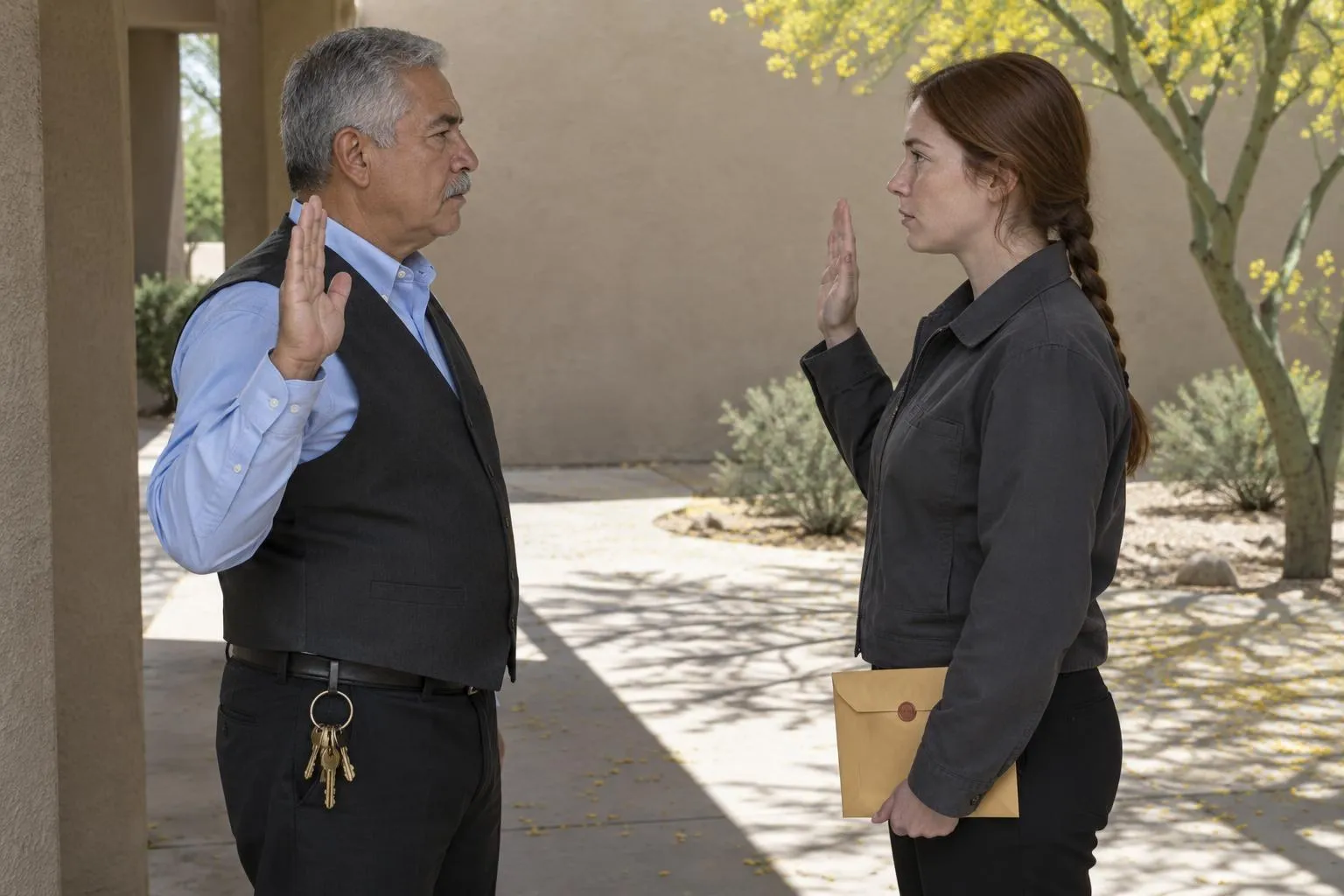
- Take an oath of honest, diligent service
- Carry a valid ID card with photo, signature, ID number, and expiration date
That ID card is renewable annually — and servers must show proof of good standing to renew. This isn’t optional paperwork. It’s what separates a valid service from a void one.
Pro Tip:Before hiring a process server in Florida, ask specifically which circuit certified them and when their ID expires. A server certified in the 12th Circuit isn’t automatically valid in all Florida counties. Confirm local approval first.
Some Florida counties add another layer: they require a motion and court order before a special server can even be appointed. You won’t find that in the state statutes — you’ll find it when a judge rejects your service.
State-by-State Requirements: The Table Nobody Provides
| State | License/Registration | Key Requirements |
|---|---|---|
| Florida | No statewide license | Sheriff-appointed or court-certified by circuit; age 18+, FL resident, background check, exam, oath, annual renewal |
| California | County registration | Age 18+, 1-year county resident, $2,000 bond |
| New York | NYC: Dept. of Consumer Affairs (5 boroughs only) | License required within NYC; outside boroughs, no formal requirement |
| Arizona | AZ Supreme Court registration | Age 21+, 1-year resident, written exam |
| Texas | Certified under TRCP Rules 103, 536(a) | Court-approved or sheriff/constable; specific civil procedure rules govern |
| Alaska | Licensed by Commissioner of Public Safety | Formal state licensing required |
| Most Other States | None | No formal license or registration required |
The “most other states” row is where people get complacent. “No formal requirement” doesn’t mean no rules — it means the Rules of Civil Procedure in that state govern who can serve, what constitutes valid service, and what documentation the court requires. A server in an unregulated state can still produce invalid service by using the wrong method or failing to file a proper Return of Service.
The Return of Service Problem
Valid certification is step one. Proper documentation is step two, and it’s where otherwise legitimate services fall apart.
Every service attempt — successful or not — should be recorded with:
- Date, time, and location of the attempt
- Description of what occurred (personal service, substitute service, no contact)
- Identification of the person served, if applicable
A completed Return of Service is what goes back to the court. It’s the affidavit that proves notice was given. Without accurate records, you can’t prove service happened — even if it did.
Reality Check:Courts don’t take your word for it. The Return of Service is a sworn document. Errors or omissions in that document are the same, legally, as errors in the service itself.
When You Can’t Find the Defendant
Service by publication is the last resort — and courts don’t grant it easily. Before a judge will approve it, you typically need to demonstrate an exhaustive search, including checks with:
- Hospitals and jails
- Tax offices and county property records
- DMV records
- Any known addresses or employers
Document every attempt. The standard is that you made genuine, repeated efforts to serve in person before asking the court to allow publication. Shortcuts here will get your motion denied.
The Key Statutes to Know
If you’re operating in Florida, the relevant citations are:
- §48.021 — Authorized methods of service
- §48.27 — Certified process servers; requirements
- §48.29 — Appointment of process servers; procedure
For other states, start with the Rules of Civil Procedure for that jurisdiction. Most state court websites publish them, and most are searchable by keyword.
See the complete guide to process servers for a broader overview of how the profession works, who hires them, and what to expect from the engagement.
Practical Bottom Line
If you’re hiring a process server:
- Ask for their certification ID — state, circuit, and expiration date
- Confirm they’re approved for the specific county where service will occur
- Verify the bond requirement if you’re in California
- Expect a proper Return of Service filed with the court — that’s non-negotiable
- For hard-to-locate defendants, ask explicitly how they document skip tracing and multiple attempts
The fragmentation of this industry — no national standard, county-level rules, annual renewals — is a legitimate pain point. The solution isn’t to ignore it. It’s to ask the right questions before you hand someone a summons and assume it’ll get where it needs to go.
Invalid service doesn’t just slow a case down. It can end it.
Done reading? Get quotes from process servers near you.
Takes about a minute. Free, no obligation; providers reply to you directly.
Popular cities:
Nick built this directory to help attorneys and collections firms find licensed process servers without relying on courthouse bulletin boards or word-of-mouth — a gap he discovered when a missed service deadline nearly derailed a case he was tracking for a legal tech project.