Get free quotes from process serving near you
Takes about a minute. Free, no obligation; providers reply to you directly.
A few years ago, I watched a collections firm get burned badly. They hired a process server for a routine summons — guy was three states away, figured he’d handle it remotely, maybe arrange a local affiliate at the last minute. The deadline slipped. The case got delayed. The attorney ate the cost and the embarrassment. The “remote-friendly” approach that works fine for knowledge work turns out to have a hard ceiling when the job is physically putting a document in someone’s hands.
That story stuck with me, because the debate around remote vs. in-person process serving is murkier than most people admit.
The Short Version:For standard residential service, a local process server is almost always the right call — no exceptions. “Remote” coordination (where a firm manages your case but dispatches a local contractor) can work well for volume or multi-jurisdiction work. There is no substitute for in-person service when defendants are evasive, addresses are uncertain, or court deadlines are tight.
Key Takeaways:
- “Remote” process serving usually means managed remotely — someone still shows up at the door
- Virtual-first firms can be cost-effective for routine, well-documented cases across multiple jurisdictions
- Evasive defendants, same-day rush, and skip tracing almost always require a boots-on-ground specialist
- Post-pandemic, the hybrid model (national firm + local servers) is the industry standard — not a compromise
What “Remote” Actually Means Here
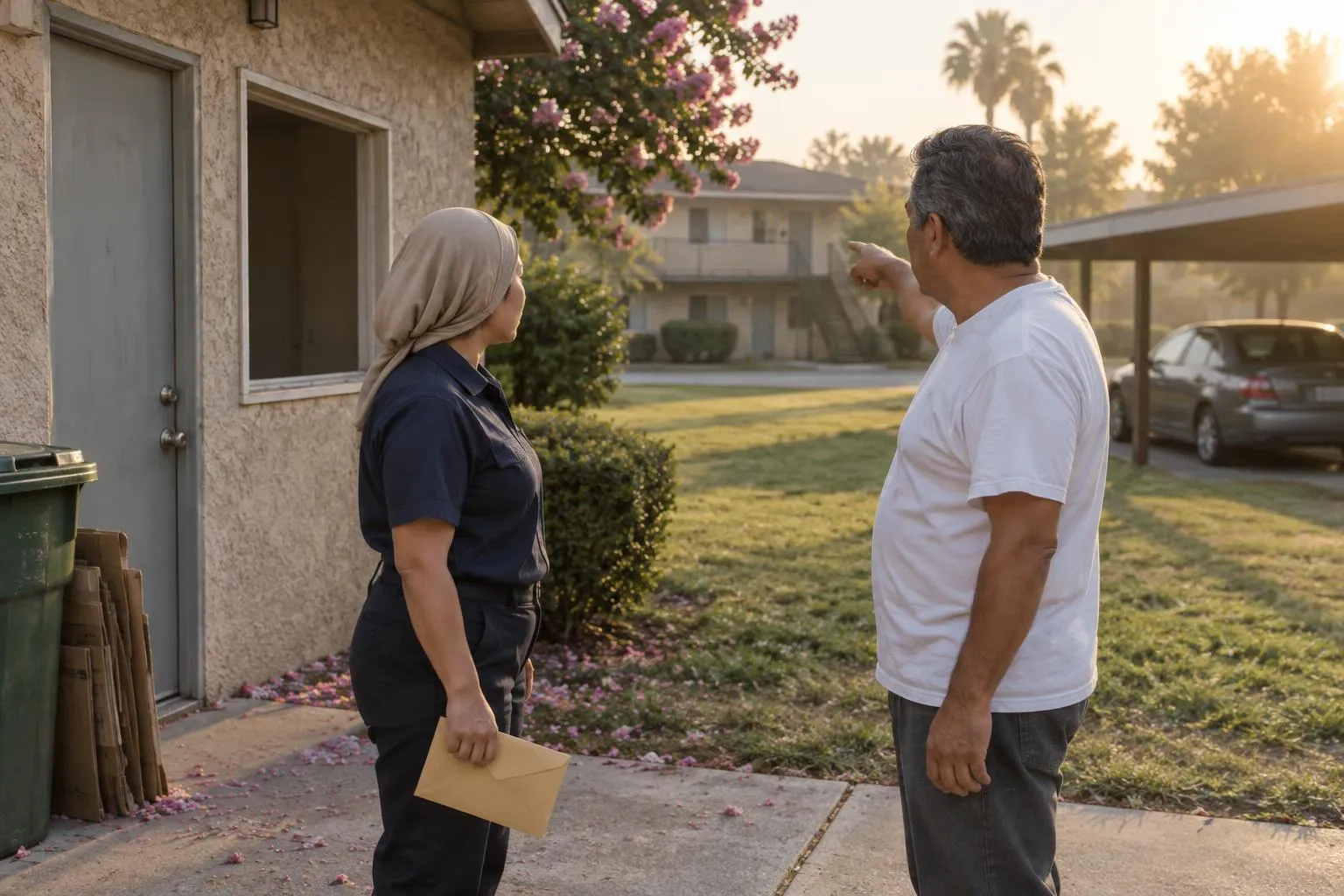
Here’s what most people miss: process serving is never truly remote in the way that, say, a Zoom meeting is remote. Someone always has to physically hand over the documents — that’s the whole point. When we talk about remote vs. in-person, we’re really talking about two service models:
Remote-coordinated: A national or out-of-state firm manages your case, assigns it to a local contractor in their network, handles the affidavit, and communicates with you digitally. You never talk to the person who knocks on the door.
Direct in-person: You hire a licensed process server in the target jurisdiction directly. They know the local courts, the local rules, and sometimes the local neighborhoods. You have a direct relationship.
Neither model is universally better. The right choice depends on what you’re actually serving, who you’re serving it on, and how much time you have.
The Comparison, Straight Up
| Factor | Remote-Coordinated Firm | Direct Local Process Server |
|---|---|---|
| Multi-jurisdiction cases | Strong — one contact, multiple markets | Weak — requires separate hires per state |
| Same-day / rush service | Risky — depends on contractor availability | Strong — direct control over urgency |
| Evasive defendants | Weak — limited skip tracing, less accountability | Strong — local knowledge, direct follow-up |
| Cost (routine service) | Competitive for volume | Slightly higher per-serve, less overhead |
| Affidavit quality | Variable — depends on contractor | Consistent — direct relationship |
| Court filing familiarity | Generalist | Local expert |
| Communication speed | Asynchronous, ticket-based | Direct, phone-accessible |
When Remote Coordination Actually Works
I’ll be honest — for high-volume, routine work, remote-coordinated firms have gotten genuinely good. If you’re a collections agency serving consumer debt summons across 15 states, managing 15 separate local relationships is a logistics nightmare. A national firm with a vetted contractor network solves that.
The post-pandemic shift validated this model. Research from general remote work patterns shows that 77% of employees report higher productivity when working from home, and businesses that embraced distributed operations found they could maintain consistent output without centralized oversight. The same logic applies to process serving networks: if the workflow is standardized and the documentation is clear, coordination doesn’t have to be in-person.
Volume law firms, collections agencies, and multi-state litigation teams have quietly adopted this hybrid model as the default. It’s not a workaround — it’s now the industry standard for anything routine.
Pro Tip:Ask any national firm to name the specific contractor they use in your target city, and whether that contractor is an employee or a 1099. The answer tells you everything about accountability when something goes wrong.
When You Absolutely Need Someone Local and Direct
Skip-tracing a defendant who’s been dodging service for six weeks is not a job for a contractor who’s never seen the neighborhood. Same-day service on a TRO isn’t a workflow ticket. Neither is a subpoena on a hostile witness in an active criminal matter.
The research on in-person work is blunt here: face-to-face interaction builds the kind of accountability and real-time judgment that asynchronous communication can’t replicate. Microsoft’s internal research found remote work led to a 25% drop in cross-team collaboration — not because people were slacking, but because the informal, real-time feedback loops disappeared. In process serving terms: a local server who can read a situation, decide to come back at 6am, notice the car in the driveway, or make a call to a neighbor — that judgment isn’t transferable via a work order.
Reality Check:If your defendant has already avoided two service attempts, a remote-coordinated firm is not going to fix that. You need a local specialist with skip tracing capability and the freedom to work the problem creatively. That’s not pessimism — it’s just the job.
Hard rules for when to hire local and direct:
- Evasive or skip-traced defendants — local knowledge is irreplaceable
- Same-day or emergency service — remove every coordination layer you can
- High-stakes affidavits — where service validity might be challenged, you want the server directly accountable to you
- Rural or non-metropolitan addresses — national contractor networks thin out fast outside major metros
- Defendants in secured buildings, gated communities, or with known hostility
The Post-Pandemic Reality Check
The pandemic forced legal services to prove that remote coordination could work at scale — and it largely did, for routine work. But it also exposed the ceiling. Zoom depositions work until someone refuses to participate. Remote court appearances work until opposing counsel objects to procedural irregularities. And remote-managed process serving works until the defendant knows the national firm’s contractor is stretched thin and decides to wait it out.
The profession didn’t go fully remote because it can’t. What changed is that the coordination layer got better. National firms built real contractor networks. Tracking systems improved. Digital affidavits became court-acceptable in more jurisdictions. That’s genuine progress.
What didn’t change: someone still has to show up.
Practical Bottom Line
Use a remote-coordinated national firm when: you have multi-jurisdiction volume, the defendant’s address is confirmed, the case is routine, and cost efficiency matters more than direct accountability.
Hire a direct local process server when: the case is time-sensitive, the defendant is evasive or skip-traced, the affidavit will face scrutiny, or you’re in a market where local court knowledge makes a real difference.
For most attorneys and paralegals, the answer isn’t either/or — it’s knowing which situation you’re in before you place the order. A good process server will tell you upfront if your case warrants direct service or if they can handle it through their network. That honesty is one of the things worth paying for.
For a broader overview of how to evaluate and hire the right process server for your case, see The Complete Guide to Process Servers.
Done reading? Get quotes from process servers near you.
Takes about a minute. Free, no obligation; providers reply to you directly.
Popular cities:
Nick built this directory to help attorneys and collections firms find licensed process servers without relying on courthouse bulletin boards or word-of-mouth — a gap he discovered when a missed service deadline nearly derailed a case he was tracking for a legal tech project.